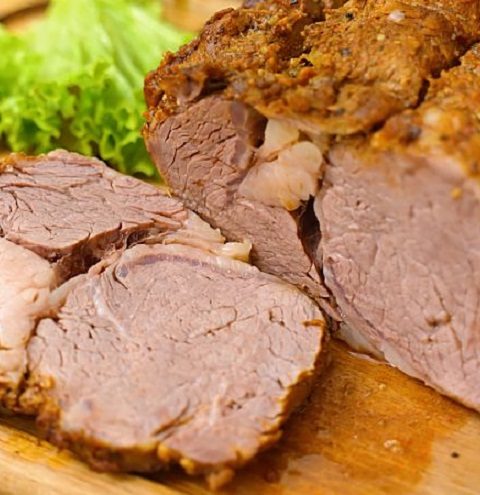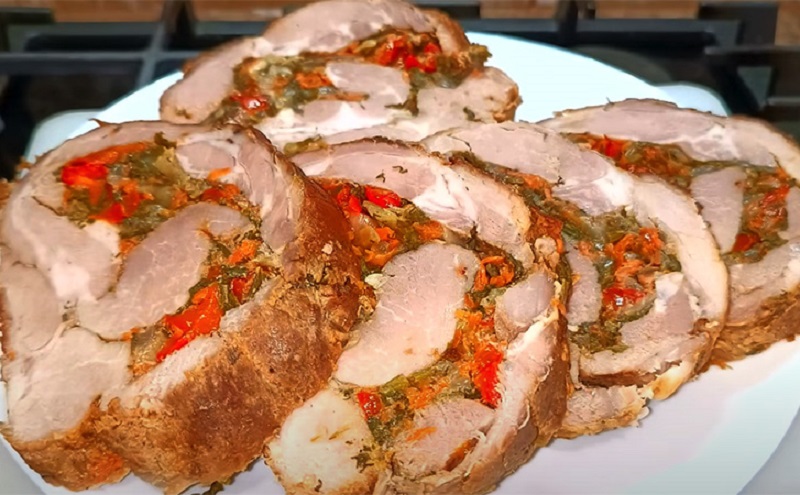
A stuffed pork roast makes a beautiful centerpiece for a holiday table, but it’s just as welcome at a cozy family dinner. I fill a butterflied pork shoulder with sautéed vegetables and fresh herbs, then roast it until tender and golden. Served hot, it’s a hearty main course; chilled and thinly sliced, it makes a delicious homemade cold cut for sandwiches and appetizer platters.
This easy stuffed pork roast recipe is flexible, too. You can adjust the spices, change up the filling, and serve it in plenty of ways. The secret to juicy pork is choosing a well-marbled cut, rolling it securely, and letting it rest before slicing.
Why I Use Pork Shoulder
Pork neck—often sold in the U.S. as pork shoulder or Boston butt—is well suited to a rolled roast. Its marbling helps keep the meat moist and flavorful as it cooks. Once cooled, the roast slices neatly and holds its shape, making it a good choice for a holiday pork roast, a special dinner, or homemade sandwich meat.
Serve thick slices with baby potatoes, mashed potatoes, or a crisp salad. For an appetizer platter or sandwiches, let the roast cool completely before slicing it thinly.
Ingredients
Serves about 8–10.
⦁ 5¼ lb boneless pork shoulder or pork butt, butterflied into a large, even sheet
⦁ 2 medium onions, thinly sliced
⦁ 1 medium carrot, coarsely grated
⦁ 1 bell pepper, diced
⦁ 3½ oz fresh herbs, finely chopped (a mix of parsley, dill, and cilantro)
⦁ Smoked paprika, to taste
⦁ Garlic powder, to taste
⦁ 1 teaspoon khmeli suneli, or to taste
⦁ Kosher salt and black pepper, to taste
⦁ Neutral oil, for sautéing
⦁ Butcher’s twine
⦁ Oven-safe roasting bag, if using
Prepare and Season the Pork
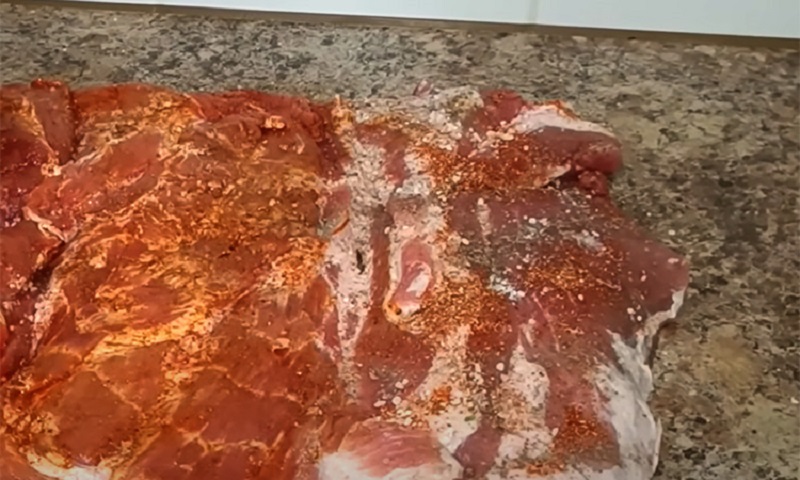
Ask your butcher to butterfly the pork shoulder into a large sheet about ⅜ inch thick, or carefully cut it yourself. Keep the knife parallel to the cutting board as you work. If needed, gently pound the meat between sheets of plastic wrap to even it out and make it easier to roll.
Rub both sides with a little oil, then season generously with smoked paprika, garlic powder, khmeli suneli, salt, and pepper. Let the pork sit at room temperature for 30 minutes, or refrigerate it for up to 1 hour for a more pronounced flavor. If refrigerated, let it sit out briefly before roasting.
Make the Vegetable Filling
While the pork is marinating, heat a little oil in a skillet over medium heat. Add the onions and carrot and cook for 5–7 minutes, stirring occasionally, until softened and lightly golden. Stir in the bell pepper and cook for another 2 minutes. Keep the vegetables tender and moist rather than cooking them until dry.
Remove the skillet from the heat, then stir in the chopped herbs. Let the filling cool slightly before assembling the roast.
Roll and Tie the Pork
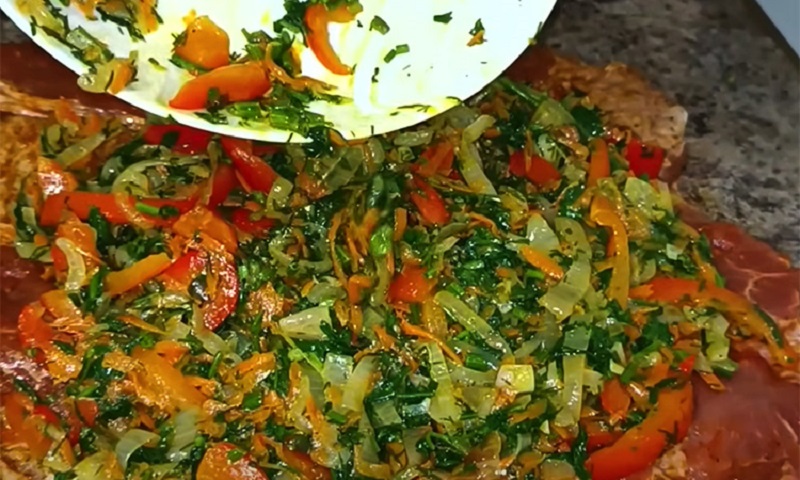
Spread the vegetable filling evenly over the pork, leaving a small border around the edges so it won’t spill out as you roll. Starting from one long side, roll the pork up tightly, keeping the filling tucked inside.
Tie the roast at regular intervals with butcher’s twine to help it keep its shape. Place it seam-side down in an oven-safe roasting bag, following the bag manufacturer’s instructions. If you don’t have a roasting bag, place the roast in a covered roasting pan.
Roast Until Tender and Golden
Preheat the oven to 400°F. Roast the pork for about 90 minutes, but don’t rely on time alone: cooking time depends on the shape and thickness of the roast. For food safety, cook whole cuts of pork to at least 145°F in the thickest part, then let the meat rest for at least 3 minutes. For a softer, more well-done roast, cook it longer, checking the temperature as it goes.
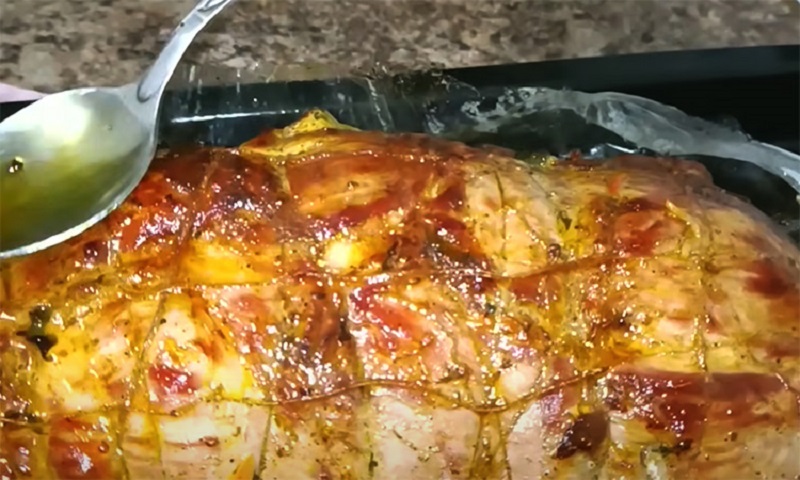
About 15 minutes before the roast is done, carefully open or remove the roasting bag according to its instructions. Spoon some of the pan juices over the pork, then return it to the oven at 450°F to brown. Watch closely so the surface doesn’t burn.
Let the pork rest for 10–15 minutes before removing the twine and slicing. Resting helps the juices settle and makes the roast easier to cut.
Filling Variations
I like the simple vegetable filling, but it’s easy to make the roast your own:
⦁ Add sautéed mushrooms for a savory, earthy flavor.
⦁ Scatter chopped prunes over the vegetables for a hint of sweetness.
⦁ Add a finely diced apple for a sweet-tart note.
⦁ Stir in a little minced chili pepper or curry powder for extra heat and spice.
You can also vary the seasoning with ground coriander, cumin, or extra smoked paprika. For a glossy finish, brush the roast with a mixture of mustard and oil before browning. A little honey can be added, too, but keep an eye on the surface because it can darken quickly.
Serving Suggestions and Storage
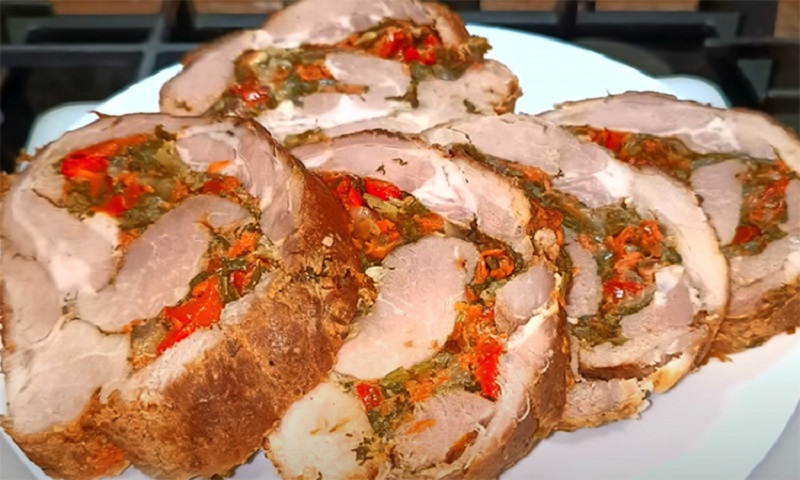
Serve the roast hot, cut into thick slices, with mashed potatoes, roasted vegetables, or a green salad. Once chilled, it becomes firm enough to slice thinly for sandwiches, charcuterie-style platters, or a quick lunch with fresh bread and your favorite sauce.
Refrigerate leftovers promptly in an airtight container and use within 3–4 days. For easier slicing, chill the roast before cutting it. You can also freeze sliced portions in a freezer-safe container.
A Festive Homemade Roast
Stuffed pork roasts are made in many culinary traditions, often for holiday meals, family gatherings, or as a practical way to prepare meat for sandwiches. I love how this version brings together tender, well-seasoned pork, colorful vegetables, and fresh herbs in one impressive dish.
With a flavorful filling and a few simple techniques, this pork roast can be the star of a festive dinner or a versatile addition to everyday meals. Make it ahead, serve it warm, or chill it for homemade sandwich slices—I hope it becomes a favorite at your table.